Showing posts with label For Amirul. Show all posts

Saturday, December 18, 2010

Unplugging the Zombies: fighting the Dajjal forerunners' weapons in my own home


I remember clearly those days when I used to mock whenever people suggest to 'doa' to solve a problem. How ignorant was I, for regarding doa as an excuse for not doing anything, for not trying hard enough, for not being independent and intelligent. Astaghfirullahalazeem...
But the real truth is, only Allah can change a heart. The heart is the sanctuary of Allah swt, the sacred place of the heart belongs to Allah and Him alone. Today, I had the reminder of this hard truth first hand.

It's end of 2010, meaning the kids are outta school. I can't recall being bored during my school holidays, even though dad hardly bring us to any vacation, nor did I have any highly attractive-time killing electronic gadgets kids these days have, no PC, no internet, heck we didn't even have phones and there were only 3 channels on tv. I kinda feel sorry for kids these days who are clueless as to what to do with their time, if all those fancy electronics (TV, DVD, PS, Wii, FB,Habbo,Mobilephone) are taken away from them. It's as if, their brain is mushed, can't think of anything, or come up with something to kill their boredom. They are zombies when unplugged.

It kinda creeps me up to watch how my kids spend endless hours infront of the TV or PC. If the radiation isn't enough to cause brain tumor (nauzubillah), I am pretty sure the inactivity/passive interaction will cause them something...either certain neurons of the brains are being killed slowly i.e creativity, critical thinking, analysis ability or their self-reliance i.e proactiveness, time management & responsibility will slowly diminishes. And when I connect the dots and think of whom are behind all these cleverly designed to be highly addictive gadgets, I shiver even more. What a clever way indeed to keep the ummah passive, lazy & blindly obedient to dunya.

I thought that the best way to deal with generation X & Z, is to just give it to them straight. I have shared rather openly to both of my kids (since my 3rd is only 3 mths old) about how shaytan works, how deceiving the Dajjal is and about the impending kiyamah. I also tried to teach my kids about the noble ways of our prophet SAW, of his adaab & manners. And since I have quit my full time job, I thought that it would be easy to catch my kids' hearts & minds, and keep them from becoming one of those zombies...oh! how naive was I to think I could overcome Dajjal's plan without any help & grace from Allah swt.

During school holidays, midnight is declared to be the unplugging or shut down time. That is when the kids are supposed to shutdown whatever gadgets they were devoting their lives to and get ready for beds. I have been very strict about this, and no amount of 'puhleeezzeee, ummi!' will thaw my icey determination. "Your eyes & brains need to rest. Shut down and go to bed. NOW." is the only answer they'll ever get from me. But tonight I lost my battle. As soon as the lights went off at midnight, I went to bed. But something woke me up at around 1.30am. I felt the urge to check up on my son. Sure enough he was infront of his laptop, playing the online game I hate the most; HABBO. Only Allah knows how enraged I was. I felt so betrayed. How stupid could he think I am. Am I not his mother which he needs to obey and respect? Wasn't the 10 hours during the day enough to indulge in the games? How hard is it to hold the urge and wait till morning when I allow them the time to play?


Reminding myself to keep cool and not to blew my head off, without a word or even looked at him I removed the laptop from him, switched off the light & closed the door behind me. I shivered in my bed, when I realized how alone, weak & fragile I am in this fight against Dajjal's weapons. If I was still working fulltime, I'd be blaming myself for not giving him enough attention & time. But I am home 24-7. He is constantly under my supervision, yet he dared to disobey me behind my back, right under my nose! Man, my ego was hurt. And I cried. I felt so helpless and scared. I thought I have done enough. I thought I had it all figured out. I thought I was smart. But Dajjal is far smarter. I felt like a failure.

At time like this, no amount of console or cheer-up words from my FB friends would do any good. I began to think off all sorts of punishment I wanted to give him the next morning, just to show him who is the boss in this house. But then it hit me, I can do whatever I want, but I can't control his heart. Maybe by grounding him for 2 weeks will hurt him the same as he hurt me, but hurting his feeling as a retaliation of what he's done would be sellfish & won't solve the problem in the long run. I must not look at the tree, but focus on the forest. I quietly pray for His help, for the hearts belong to Him and only He can inspire the heart to change for good.

It's 2:00am, and I felt the urge to go the the toilet. My toilet has a window which faces my son's room. Through this window (I didn't switch on the light) I saw that my son (whom I thought was sleeping after I took his laptop away half hour ago), got up and went to his bathroom. I caught him performing the wudu' and later went to his room and performed solat. Again I cried, alone in the dark but this time for a different reason. Allah was indeed listening and understood my situation clearly. He inspired my son and softened his heart to turn to Him. And Allah has also gave me the opportunity to 'watch' my son silently. I could feel that Allah is trying to teach me something. That is wasn't that bad after all. That if no one appreciates my sacrifice & effort to raise my kids, He does. And I feel that He was trying to tell me that turning to Him and Him alone could change a situation. And that what I did was right...asking for His help with great humility, and not complaining to fellow humans (as I often do on FB especially). And last but definitely not least; I should me more concern if my son doesn't please Allah swt, his creator and not too overly concern if he doesn't please me, his mother.


'Invoke your Lord with humility and in secret.' (Qur’an 7: 55)

The lesson that I learned today is to stop going to people for help or for intercession, and instead, began praying to Allah especially in the last third of the night. Now I know that whenever I am down or in need of any help, I would call to Allah and invoke Him for relief. Which reminds me of this hadith:


Abu al-‘Abbas ‘Abdullah bin ‘Abbas, radiyallahu anhuma, reported: One day I was behind the Prophet, sallallahu ‘alayhi wasallam, and he said to me:

"O young man, I shall teach you some words [of advice] : Be mindful of Allah, and Allah will protect you. Be mindful of Allah, and you will find Him in front of you. If you (have need to) ask, ask of Allah; and if you seek help, seek help from Allah. Know that even if the Nation (or the whole community) were to gather together to benefit you with something, they would not benefit you with anything except that which Allah has already recorded for you, and that if they gather together to harm you with something, they would not be able to harm you with anything except that which Allah has already recorded against you. The pens have been lifted and the pages have dried."

[Al-Tirmidhi relates this and says: It is a good, genuine Hadith]

In a version other than that of al-Tirmidhi it reads:

"..Be mindful of Allah, you will find Him before you. Get to know Allah in prosperity and He will know you in adversity. Know that what has passed you by was not going to befall you; and that what has befallen you was not going to pass you by. And know that victory comes with patience, relief with affliction, and ease with hardship."
Wallahualam. Jazakallahukhayran for reading.

Wednesday, May 12, 2010

A Blessed Soul


Despite reading quite a number of unsettling views/rumours/opinions about Syeikh Hamza Yusuf, deserved or not, true or not Wallahu'Alam, I am still intrigued by this soul. Listening to his khutbah, lectures, reminders somehow managed to hit a certain button in my soul.

I stumbled upon this unofficial website dedicated to him by a fan http://sheikhhamza.com and learned about his spiritual journey. In his early years as a muslim, he often had a dream about Murabbit Al-Hajj and he travelled the foreign land to seek him for guidance. He managed to find this blessed soul and this is the story of his encounter:


After two grueling days, we arrived in a beautiful town known as Geru, which at the time had no technology, and the buildings there were all a lovely adobe. Hundreds of students studied at seven madrassas, called mahdharain Geru. At night, with the exception of a few flashlights, candles, and kerosene lamps, all was dark so the Sahara night sky could be seen in all its stellar glory. The entire town was filled with the soothing sounds of the recitation of Qur’an and other texts.

We stayed with Shaykh Khatri, the brother of Murabit al-Hajj’s wife, Maryam, and a cousin of Murabit al-Hajj. While in Geru, I came to know a great saint and scholar, Sidi Minnu, who was already an old man at the time. He memorized all of the Hisn al-Hasin of Imam al-Jazari and recited it every day. His other time was spent in praying for the entire Ummah. Once, we were sitting on the sand and he picked some up with his hand and said to me, “Never be far away from the earth, for this is our mother.” He then said something that struck me to the core: “I have never regretted anything in my entire life, nor have I ever wished for anything that I did not or could not have, but right now I wish that I was a young man so that I could accompany you on this great journey of yours to seek knowledge for the sake of God.”

After a few days, we set out for Kamur, which we had passed on our way to Geru, and then took camels and set out for Murabit al-Hajj; by nightfall we arrived in Galaga, a valley with a large lake that rises and lowers with the rainfall and the seasons. After breakfast the next morning, we set out for the upper region some miles from where Murabit al-Hajj’s clan was encamped.

As we came into Tuwamirat, I was completely overwhelmed by its ethereal quality. It was the quintessential place that time forgot. The entire scene reminded me of something out of the Old Testament. Many of the people had never seen a white person before and the younger people had only heard about the French occupation, but never seen French people or other foreigners for that matter. I entered the tent of Murabit al-Hajj.

My eyes fell upon the most noble and majestic person I have ever seen in my life. He called me over, put his hand on my shoulder, welcomed me warmly, and then asked me, “Is it like the dream?” I burst into a flood of tears. I had indeed experienced a dream with him that was very similar to our actual meeting.[32]

Murabit al-Hajj

It was 1985, and the most life-changing part of Shaykh Hamza’s life would occur over the next 3 years. He sat at the school of Murabit al-Hajj and studied not only the sacred sciences, but also the traditional bedu way of life.

“Murabit al-Hajj’s birth name is Sidi Muhammad ould Fahfu al-Massumi, and he was nicknamed Hajj Umar by his mother after the great scholar and warrior, “Umar Tal of Senegal”.

During the blessed time that I was fortunate to have lived with him in his own tent, I observed his daily routine: He would usually awake at about 2:30 or 3:00 in the morning and begin the Tahajjud or night prayers. He would often recite for a few hours, and I heard him repeat verses over and over again and weep. Just before dawn, he would sit outside his tent and recite Qur’an, and then when the first light of dawn was discernible, he would walk to the open-air mosque and call the adhan. He would then pray his nafilah and wait for a short period and then call the iqamah. During that time, I never saw anyone else lead the prayer, and he would almost always recite from the last 60th of the Qur’an as is the Sunnah for a congressional Imam to do so according to Imam Malik.

After the sun rose and reached the level of a spear above the horizon, he would pray the sunrise rak’ahs and then return to his tent where he would have some milk brought fresh from a cow. He would then teach until about 11:00 in the morning and nap for a short while. After that, students would start coming again, and he would continue to teach until about 1:00pm at which time he would measure his shadow for the time of the midday prayer. He would then call the adhan at the time his shadow reached an arm’s length past the post meridian time as is the Maliki position on the midday prayer, if performed in congregation, to allow for others to come from their work after the heat dissipates. He would always pray four rakahs before and after the midday prayer and then return to his tent where he would teach until afternoon. He would usually have a small amount of rice and yogurt drink that is common in West Africa. Then, he would measure his shadow for the afternoon prayer, and when he ascertained its time, he would proceed to the mosque and call the adhan.

After Asr, Murabit al-Hajj would return to his tent and usually resume teaching and sometimes listen to students recite their Qur’an lessons from memory and he would correct their mistakes. During any lulls in his teaching, anyone in his presence could hear him say with almost every breath, “La ilaha illa Allah,” or he would recite Qur’an. At sunset, he would go and call the adhan, pray Maghrib, and then sit in the mihrab and recite his wird until the time of the night prayer. He would call the adhan, lead the pray and return to his tent. He would usually have some milk and a little couscous and then listen to students recite Qur’an or read Qur’an by himself. At around 9:00 pm he would admonish himself with lines of poetry from Imam Shafi’s Diwan and other well-known poets. He would often remember death with certain lines that he repeated over and over again, especially the following that I heard from him many times:

O my Lord, when that which there is repelling alights upon me,

And I find myself leaving this adobe

And become Your guest in a dark and lonely place,

Then make the host’s meal for his guest the removal of my wrongs.

A guest is always honored at the hands of a generous host,

And You are the Generous, the Creator, the Originiator.

Surely kings, as a way of displaying their magnanimity

Free their servants who have grown old in their service.

And I have grown old in Your service,

So free my soul from the Fire

He often repeats these lines for what seems like an eternity, his voice penetrating the hearts of all those within earshot. He once admonished me with lines of poetry, one after another, until I wanted the earth to swallow me. He said to me, “And what is man other than a comet that flashes brilliant light for a moment only to be reduced to ashes.”

He told me several times, “Hamza, this world is an ocean, and those who drown in it are untold numbers. Don’t drown.”

I have never seen anyone like him before him or after him, and I don’t think that I ever will. May Allah reward him for his service to this din and his love and concern for the Muslims. He was never known to speak ill of anyone. Once when a student was studying Khalil with him and asked what a certain word meant in the text, he explained to him that it was a slow and clumsy horse. The student then said, “like so-and-so’s horse?” At this Murabit al-Hajj suddenly became upset and said, “I don’t spend much time with people because they backbite, so if you want to study with me, you must never speak ill of anyone in my presence.” It is not well known by Muslims that to speak ill of someone’s animals falls under the ruling of backbiting.

Shaykh Murabit al-Hajj is a master of the sciences of Islam, but perhaps more wondrous than that, he has mastered his own soul. His discipline is almost angelic, and his presence is so majestic and ethereal that the one in it experiences a palpable stillness in the soul. As the Arabs says, “the one who hears is not as the one who has seen.” I was told by many people from his family that had I seen him in his youth, I would have been even more astonished at his devotional practices.

He is recognized in Mauritania as being one of the last great scholars, and his fatwa is highly respected among the people of West Africa who know of him, and they are many.”

- For those critics of Syeikh Hamza, I guess we can only qualify to criticize him IF, and ONLY IF we have had similar courage to leave the comfort our our homes, loved ones and wordly possession to seek the real meaning of ISLAM in the name of Allah swt. If we haven't, then I think we should just shut-up and learn a thing or two about his experience.

Wednesday, May 5, 2010

The temporary world has lost a gem

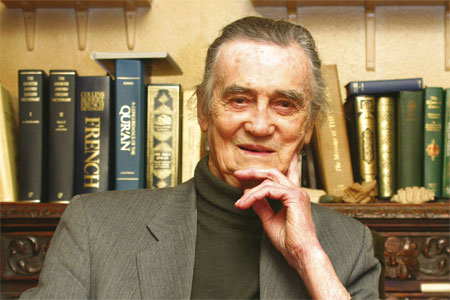
I 'stumbled' upon this obituary (for the lack of a better word, stumble was used though I do not really believe in coincidence. I believe in maktub, qada' & qadar) . I am ashamed to call myself an avid reader but yet to have the honor to read this great mind's work.

I plan to order his books from Amazon, the only place I can get his work from and thanks to my dear friend KJ, I can have save hundreds on the shipping since she'll be spending her summer holiday here in Malaysia. When la this amazon can offer good shipping to this side of the world!

For the reason of my ignorance of this great man's work (I shall save a space in this blog to write about his books once I manage to get hold of one), I will just cut and paste the obituary by another fellow blogger.

From http://seekersguidance.org

Orbituary for Gai Eaton - Remembering the UK’s eloquent voice for Islam - Hisham Hellyer - The National

Remembering the UK’s eloquent voice for Islam - The National Newspaper

In retrospect, it was a litthttp://www.emel.com/images/mr_eaton_issue1_1.jpgle bit peculiar to call his house after his passing. I was hoping to give my condolences to his family – instead, I got a chance to hear his voice one last time. On his answering machine, he still came through as the distinguished gentleman I had always known him to be. With the passing of Charles Le Gai Eaton, also known as Hassan Abdul-Hakeem, the last of a particular generation of remarkable western Muslims left this world – and certainly, he was one of the more influential of them, as attested by the numerous condolence messages from across the spectrum of British society and Anglophones everywhere.

Raised as an agnostic, Eaton received his education at Charterhouse (a renowned school in England), before going to study at Cambridge University. After working for some time as a teacher and journalist in Jamaica and Egypt, he joined the British diplomatic service in 1949. In 1951, he became Muslim, which irrevocably changed his world view, enabling him to become one of the pre-eminent writers on Islam for a British audience in the contemporary age. He was deeply engaged with the challenges facing Britain’s Muslims, and later served them at the Islamic Cultural Centre at Regent’s Park in London with distinction for many years.

Many people in the UK have become Muslims since 1951 – but Eaton made a particular contribution to all English-speaking communities. As a young university student researching Islamic thought, I looked hard for contemporary authors in that area of study, even if they were not religious authorities themselves. Much of what was available at the time, particularly in the English language, was infused with political undertones, and aimed at an activist lifestyle. While the call to action through faith isn’t wrongheaded as such, it has its limitations. Eaton’s works, such as King and the Castle and Islam and the Destiny of Man, were completely different, aiming at reorientating the reader towards a God-centred life, rather than a life aimed at success in this world.http://www.its.org.uk/images/bigcovers/0946621470.jpg

He was empowered by his deep attachment to living a faithful life in the contemporary world, combined with a profound suspicion of what modernity really had to offer in the advancement of the human being. He wrote as a Muslim, but those who read his works were from all faith backgrounds and none. He insisted that he was not a classically trained authority of the Islamic sciences, but he had a unique way with the English language that few writers on Islam could match. His admirers did not always share his philosophical perspectives, but few could deny his profound eloquence and high culture.

As a young student, I met Eaton at an academic conference, and took the opportunity to tell him how impressed and touched I had been by his books. He was so utterly humble – although I was much younger than him, he seemed incredibly embarrassed when I made the very suggestion that his works were of any worth. Recognising him as one of the last great spiritual writers of his generation, and a reminder of high culture, I kept in touch with him, although it was certainly a one-sided relationship. When I last visited him in his home in Surrey with a friend, he was the epitome of a gentleman – he should never have exerted himself, considering his advanced years, but he nevertheless treated us with the highest hospitality.

My companion was incredibly grateful just for the opportunity to encounter him in the flesh – and that was entirely appropriate. For all those who read him, he was a deeply spiritual author who reminded us how the English idiom ought to be used when speaking of the highest spiritual matters. He was keen to jog our memory as to the importance of correct language, refusing to be swept away by current trends to overuse words like “tolerance” and “terrorism”, both of which he felt were utterly abused and bereft of their proper meaning. In the aftermath of the July 7 bombings, he warned many against curtailing civil liberties in response, and cared little for the fact it was an unpopular position to take.

In his last days, I received a message from a friend who had tended to him in his old age. At that time, Eaton was stable, but appeared as though he was wholly resigned to what he knew was inevitable for every soul. He saw his last days not in despair, but in hope for the mercy of God, displaying for his family and friends an elegant resignation. The Prophet of Islam said: “Death is the only preacher you need” – and Eaton himself was a preacher in the way he lived and the way he died.

His death, as his life, was fortuitous. He died on a Friday, which is noted as a special day in Islam – but he also died on the birthday of the Prophet. Eaton was particularly drawn to the Sufi experience within Islam, and within that experience, the celebration of the birth of the Prophet, as the “mercy to the worlds”, is especially important. That he passed away on that day is not something he would regard as coincidence – for indeed, he loved the Prophet with his heart and soul.http://www.muslimnews.co.uk/awards/2004/images/legai.jpg

The school Eaton attended in Surrey had a Latin motto: Deo Dante Dedi – “God having given [to me], I gave”. His life is a testament to that adage – he felt so grateful to God, he made it incumbent upon himself to give to others in the books he wrote and the service he provided. With his passing, it truly is an end of an era for Britain.

Charles Le Gai Hassan Abdul-Hakeem Eaton was born in Lausanne, Switzerland in 1921. He passed away in London, England on February 26, 2010.

HA Hellyer is the author of “Muslims of Europe”, a Fellow of the University of Warwick and the director of the Visionary Consultants Group


Thursday, April 29, 2010

Shitty Day

Yesterday was one of those days that made me feel like I want to run to the highest peak and scream from the top of my lung. I was overwhelmed. Suddenly it was just too much to handle, and yet I didn't accomplished much. I felt like a complete failure.

Had a rough day at work, to the point that I felt hopeless. Went home through usual bad KL traffic in the rain. While stuck in the stupid traffic , I felt like I was in Natelie Imbruglia's music video Torn, ...

Nothing's fine, I'm torn! I'm all out of faith...this is how I fell...I'm cold and I am shamed, lying naked on the floor....there's just so many things that I can touch, I'm torn!

Got home, emotionally, physically drained. Somehow today the cheery faces of my kids welcoming at the gate didn't help much. Felt really bad for the kids, going home in a zombie mode like this. But I couldn't fake it anymore, couldn't put on a show anymore.

Then Amirul, my eldest was the last straw that broke it all. He happily announced he didn't turn in his homework because he forgot. I knew he is just ten, and he has always been a great boy but I was so upset that he made feel that I am the only one TRYING the be the best, while everybody else in my world, just play along and do whatever they like.

I broke down, cried and wailed. Though knowing the crying won't help solving anything, but it did me good..it kinda lick my wound.

Hubby went to talk to Amirul while I was in the shower. When I was done, Amirul came to me, with puffed, red eyes. He hugged me and said "I'm sorry, Ummi". I didn't rub it in cause there's simply no reason to. He has been a great boy, without any effort from my side. The one who claimed motherhood just from carrying him in my tummy for 9 months, but spent most of her time at work, trying to fix other problems which is not hers to begin with...and then come home drained, everyday expecting nothing but the best from him. Who the hell do I think I am? What right do I have to demand such perfection when I wasn't even there to guide him?!

I am so torn. On one hand I feel I have tried my best to be the best in all roles, and if only everybody else on this planet would put in the same effort, then maybe it'll be less problematic. But on the other, who ASKED me to be ALL THAT? DO I even know why I was put here on earth? Why so kay-poh and assume that I am the one?

If only I get a dollar everytime I hear people say this to me "You are too hard on yourself..."


Tuesday, March 9, 2010

Do you LOVE your job?


I was at home yesterday, down with flu, cough & headache. Dr. gave me some medicine that supposedly to knock me down hence she gave me the day off and asked me to rest. I have a few to do list to catch up, but decided to follow Dr's order to really rest.

While lying down on the sofa, my sweet Alyssa came and asked "how come you are not at work, mummy?". "I'm sick, honey". Silence. Then she asked "Do you LOVE your job?". I took a while to answer. "I like it, but I don't LOVE it". Quickly I asked her the same question, trying to avoid her follow-up 'why?' question. Such a relief to hear her say " I LIKE & LOVE my school". Which is obvious, she looks forward to go to school, started immediately on her homework once she reached home, and shared her daily routine with us voluntarily.

Unfortunately for me; the story is opposite. I DON'T look forward to work, I procastinate every job that I have, and I stop sharing about the happenings at work.

I have been to a few job interviews recently, looking yet for another escape. But in all the interviews, I hear the same theme' bigger responsibility, more time away from family, more stress, more tired...though they offer more MONEY. I have been down that route before, when money was not a problem but time & energy was. I knew what it's like, I know how it feels. Question is should I maintain the same route to complete my journey? Soon, I will be 36. Another 4 years before I hit 40. The Prophet Muhammed SAW once said "Sesiapa yang berusia 40 tahun, amalan kebajikannya belum mengatasi amalan kejahatannya, maka bersedialah ia ke neraka Allah." (Riwayat Tabrani). Scary thought...

a short poem I got from another blogger, which serve me right;

engkau beriya mahu syurga..
tapi kau cinta dunia..
kau sayang pada agama..
tapi kau tidak mengangkatnya..
setakat fardhu yang kau laksana..
kau dah rasa sempurna..
kemudian engkau boleh kata..
yang haram itu tak apa..
sikit saja.
sampai kapan mahu di takuk lama?


I seriously don't know what's stopping me from leaving this kind of 'world' (the one I am used to) to a new world. I must confront and conquer my fear, and have greater faith. I hope that one day I would be able to answer just as confident as my sweet girl; "I LOVE my job!".

Wednesday, January 21, 2009

Thursday, January 15, 2009

A Role Model For Amirul: Syakh Hamza Yusuf

I can't pin point the exact day when I first learned about Syakh Hamza Yusuf. It was not that far back, but all I can remember was that I came across this blessed soul's videos on youtube when I was down with some tribulations with our new life in Singapore. Since that day, I am hooked on his lectures...never lasted a week without listening to his advice.

Amirul, I pray to Allah for you to be lost, lonely & scared by the time you reach 17, the way Syakh Hamza Yusuf did. The sun rises right after the darkest hour of the nite. During his darkest hour, Hamza Yusuf was driven to seek the truth which has led him to the Qur'an. And how grateful we should all be that he didn't just stop there. He seeked more knowledge (and I believe still IS seeking) and spread them to us. Wise, logical, in-the-face facts delivered without an air of arrogance.

Look at how confident, well-read yet gracious this learned man was, sparring against this Hard Talk host whose intention was obvious (to condemn Islam). Syakh Hamza uses different style addressing different audience. He is linient, open, with the non-believers and fierce, straight to the point to us muslims. Which is probably what we, the muslims need.

more on this gem to the world : http://etharelkatatney.blogspot.com/2007/10/hamza-yusuf-tough-medicine.html